Tradition binds generations at Raleigh fair tobacco stringing contest
Sophie Sunday competed at the North Carolina State Fair in Raleigh during a traditional farm craft event. The seventh grader joined older relatives to celebrate a farming practice that supported generations of North Carolina families. The 12-year-old was the youngest participant in the fair’s annual tobacco stringing contest.
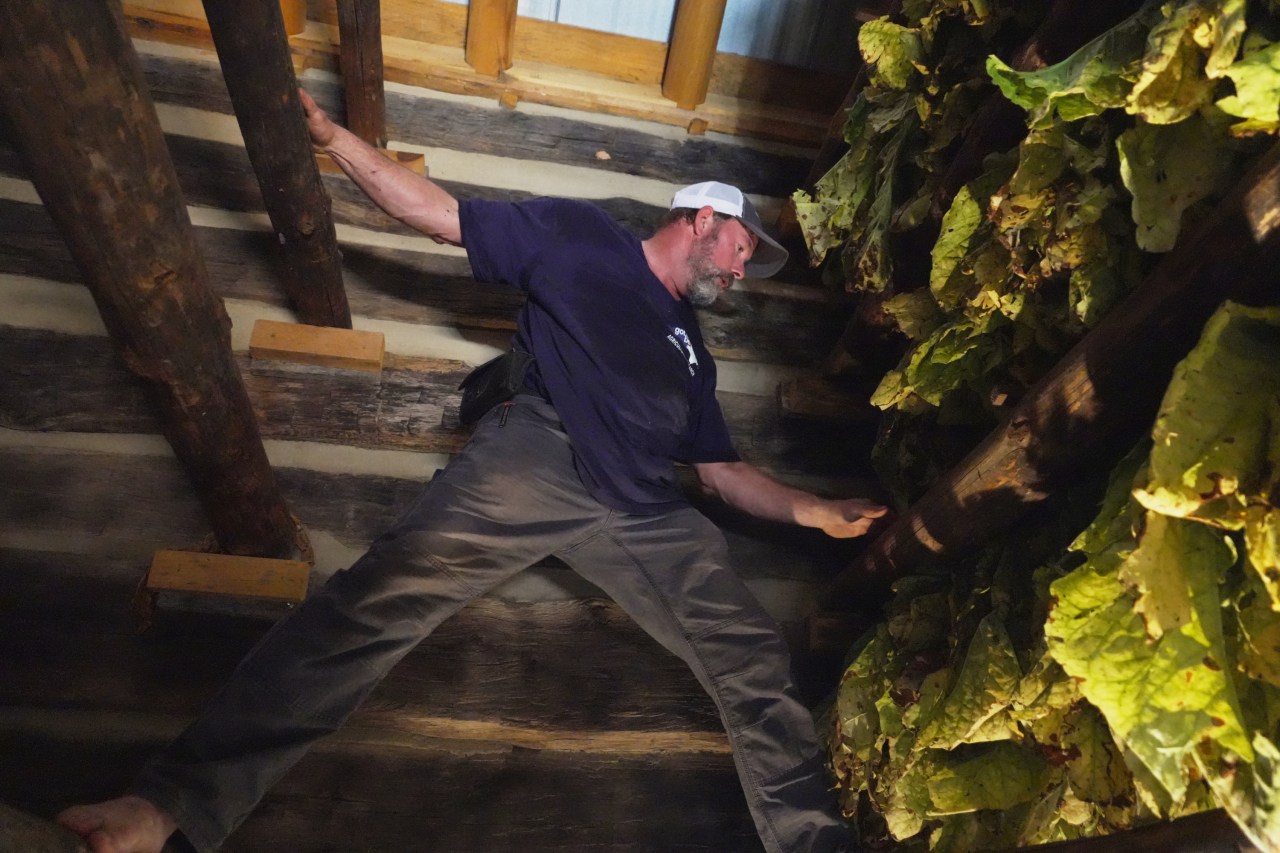
Traditionally, farmers harvested tobacco by hand and hung it in log barns. Wood fires had to be stoked day and night to cure leaves to a golden brown. Green tobacco first had to be tied on long wooden sticks.
The practice has different names across the state. In the capital, fair organizers call the event a stringing contest. Eastern areas refer to the work as looping.
“Where I grew up, in the middle of the state, we call it stringing,” said Pat Short, superintendent of the fair’s Heritage Circle. “But down east, in the eastern part of the state, they call it looping tobacco.”
Today, machines harvest most of the state’s flue-cured crop. Leaves are packed into natural gas-heated metal bulk barns. The modern barns resemble shipping containers.
At 97, Ruth Coats was the oldest competitor at the fair. Coats once worked her family’s crop near the Virginia border. Tobacco allotments were once hereditary property rights passed through families.
“It was good, hard work, but it made you much stronger,” Coats said with a giggle. “A lot of memories of my family and friends.”
Generations share historic farm skills
North Carolina remains the nation’s leading tobacco producer. The crop has fallen to third in value behind corn and soybeans. Most tobacco ends up in smoking products.
Growers produced more than 248 million pounds last year, according to the U.S. Department of Agriculture. That crop was valued at nearly $546 million. Farm sizes have shifted over the decades.
“When we were growing up, if people had anywhere from 6 to 10 acres of tobacco, they could actually raise enough money to raise their family,” said Ken Jones, Sophie’s grandfather. “But now, most of the guys contract (with tobacco companies) 400 to 600 acres (162 to 243 hectares) of tobacco at one time.”
A dozen teams competed under a white tent on Friday. Temperatures in Raleigh reached 90 degrees Fahrenheit. Groups included the following:
- The Tie Masters
- The Mule Stringers
- 89 & Twine
- The Benson Nites
- Maple Hill Loopers
- The 3 Suckers
Short started the contest with a countdown. Two handers grabbed leaf clumps from a table. The stringer wrapped twine around the stems and the stick.
Workers tied at least 36 bundles on each stick. They wrapped the twine at the end and tore it off. The fastest teams finish in under a minute.
Contestant Peggy Medlin, 89, recalled working as a speedy teenager. Her boss dismissed other workers because of her pace.
“And I made $6 for looping 600 sticks,” Medlin recalled with a grin.
Judges also evaluated quality. A worker gave each stick firm shakes before judging. Loose leaves create farm hazards.
“Because in the curing process, that would be a bad thing if it caused it to catch on fire,” explained Andrea Ashby, director of public affairs for the state Department of Agriculture and Consumer Services.
Teams chased a $250 first prize. Sandy Jones learned looping on a southeastern North Carolina farm. She taught her daughter, Annie, and later taught Sunday.
Sandy Jones joined the defending champion Maple Hill Loopers. The squad included her husband, Ken, and son-in-law Mike Sunday. Sophie Sunday competed with her mother, Annie, and a great-aunt as The 3 Suckers.
The name referred to small side shoots that stunt leaf growth. The Benson Nites won the contest with a time of just under one minute and four seconds. The Maple Hill Loopers placed second.
The 3 Suckers did not place in the competition. Sunday said the event remained meaningful to her.
“I think of it as tradition,” Sunday said.
Tobacco strung at the fair was grown at Oxford Tobacco Research Station. Short said the fair crop will be sold to a contractor. Sunday noted modern research uses for the crop alongside older products.
“Every single year I go, I’m like, `Why do we do this? It’s, like, bad for people,’” Sunday said. “But the leaves can also get used for, like, different things, not just smoking.”
Sunday plans to teach her future children the technique. Sandy Jones welcomed the family plan.
“It makes my heart smile,” Sandy Jones said.
The North Carolina State Fair features agricultural exhibits and living history demonstrations in Raleigh. Heritage Circle displays historical farm tasks to show visitors rural traditions from earlier centuries.
Sunday attends seventh grade. She plans to continue the family looping practice.