Dylan Smith returns to Sheridan football after severe ACL injury
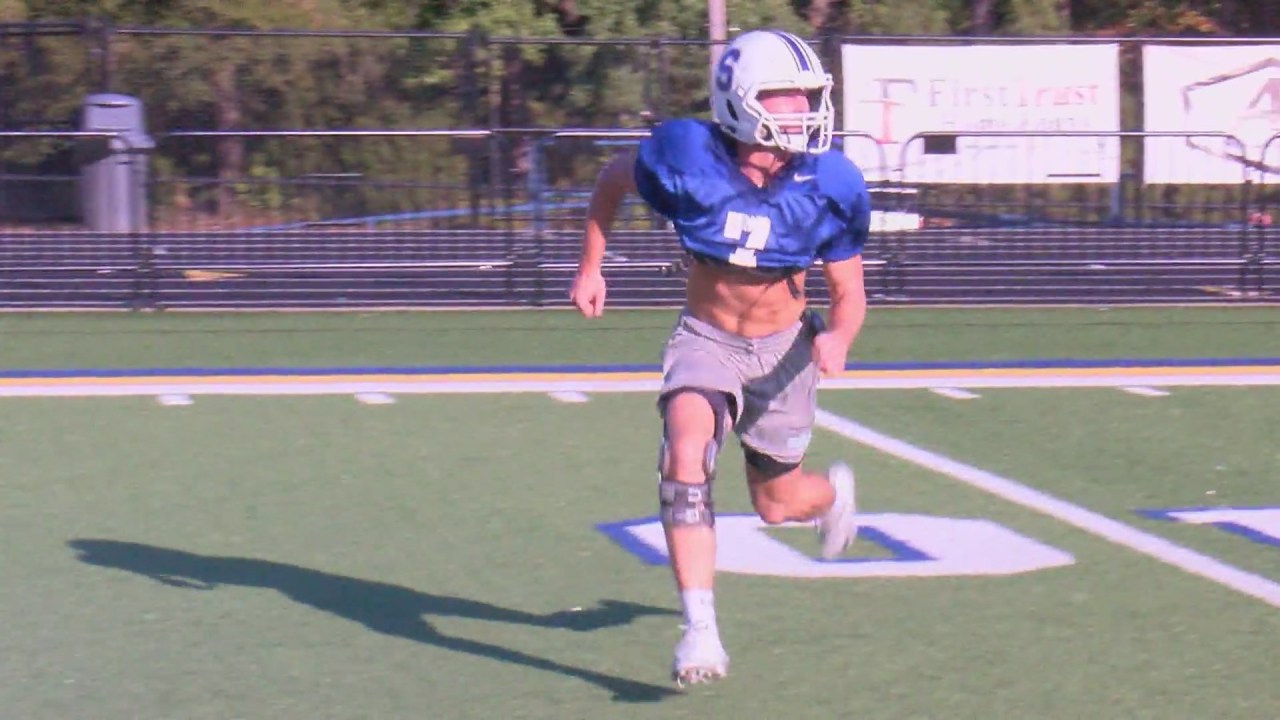
Dylan Smith is back playing football for Sheridan after recovering from a severe knee tear. The senior athlete completed an accelerated recovery to rejoin his team for his final season.
Doctors told Smith he might never play sports again. The diagnosis followed a breakout junior season.
“The doctors telling you that you’ll never be able to play your sport again. You know, that’s really heartbreaking,” Smith said.
The incident happened during spring practice in April. Smith chased teammate Walker Shields and attempted to change direction.
“I tried to stop on a dime, and I probably shouldn’t have done that,” Smith said.
Smith tore the ACL in his right knee. It hurt him deeply.
“Whenever the doctors first told me about it, I was really sad. I think I cried for about two hours, you know, because football is a big deal to me.”
An ACL tear normally requires nine to 12 months of recovery. Smith turned to Sheridan head coach Kevin Kelley.
Kelley previously helped his own son return to the field 57 days after ACL surgery in 2016. Smith’s parents gave permission for a daily workout plan.
The daily rehabilitation regimen lasted roughly an hour and a half. Kelley focused on preventing muscle loss around the joint.
“Right after surgery, we were just doing bodyweight stuff like air squats, walking around, stuff like that. And then we’d go to boxes and start doing step-ups,” Smith said.
Kelley noted that surrounding muscles shrink rapidly after such injuries.
“The muscle surrounding it shrinks. They atrophy. All the muscle goes away,” Kelley said. “We found the ones you can do, added some things to them.”
Smith trained for 12 weeks and two days before running again.
“The first day he told me that I could run, I was just trying to fight back tears,” Smith said.
Smith rejoined the active lineup. He scored several touchdowns during a 4-0 start for the Yellowjackets.
“When he did play in his first game, I’d had tears in my eyes, and I almost got them now because I watched the grind that that kid went through,” Kelley said. “But he kept pushing. How do you not pull for a kid like that?”
High school athletic programs follow medical protocols to manage student rehabilitation. Coaches work alongside family members to monitor player conditioning.
“I don’t think that was my time. I’m glad that God gave me extra time in the game. I remember thinking, like, even if I get one play, it’ll all be worth it,” Smith said.